Country Guide

China

China

Guest Editor

William Bao Bean

General Partner at SOSV

William Bao Bean is General Partner at SOSV, a US$650 million Venture Capital fund known as “the Accelerator VC,” and Managing Director at Chinaccelerator & MOX. William joined SOSV from SingTel Innov8 Ventures where he was Managing Director supporting China investments. Before SingTel Innov8, William was a Partner at Softbank China & India Holdings, a venture capital firm backed by Softbank and Cisco.

Guest editors are local ecosystem leaders: successful founders, investors, or thought leaders. Have someone in mind? Nominate a country guest editor.

Disclaimer: all content within the Startup Ecosystem Summary and Editor’s Guide sections is written by and reflects the personal perspective of the guest editor. The guest editor is not responsible for content within the Country Snapshot and Community sections, as much of this content is compiled from external sources and does not necessarily reflect the guest editor’s view.

Startup ecosystem summary

Key Startup Cities

Shanghai, Beijing, Shenzhen, Hangzhou

Connected Country Ecosystems

India, Indonesia, Malaysia

Differentiators

  • The top or second-ranked economy in the world (depending on which measures)
  • A top global market in terms of VC investments, with over US$80 billion invested 
  • China has its own Internet ecosystem, one not dominated by Google, Facebook, Amazon etc.

Challenges

  • Venture capital investment has declined dramatically since September 2018
  • Government investment backing the VC funds declined–the crash followed a bubble in the VC market, and now it takes more time than before for founders to raise money

Editor's Guide

Introduction

China is one of the top economic entities in the world. Many foreigners are starting their businesses in China from scratch or expanding from overseas to the Chinese market. Many opportunities exist: the biggest trend for today’s Chinese startup ecosystem is a focus on deep tech. You really need a technical advantage in order to survive as a startup. It could be AI or blockchain, but deep tech is the key to startup success in China today.

Outlook

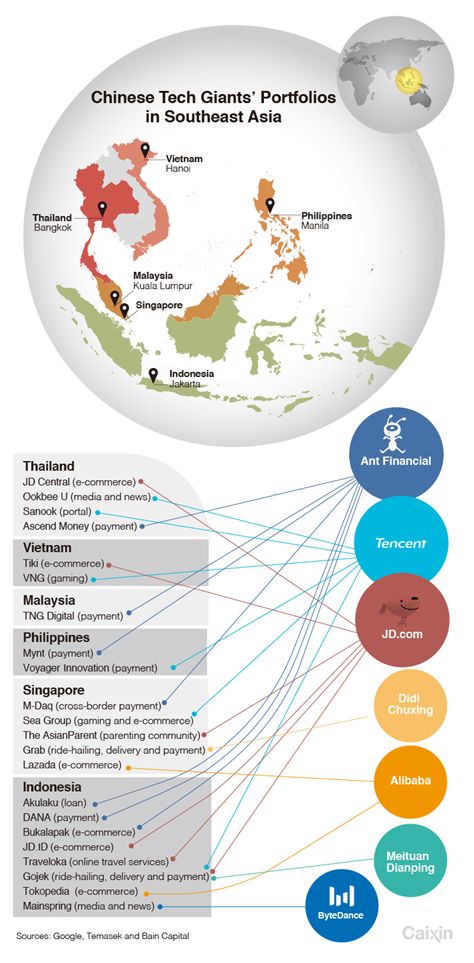
China is increasingly becoming a consumer market and much of its economic growth is consumer-driven rather than coming from exports or manufacturing. Retail and service companies are probably in the best position to take advantage of that. Another trend is automation. China’s labor supply is full. It has become much more expensive in China to operate than before, so robotics and automation will be key drivers over the next three to five years. The third trend is China going outside its borders. China’s development today on the Internet side has been mostly focused on the domestic market. Some of the most valuable Internet companies in the world are Chinese, but most of them haven’t historically operated outside of China. That changes now. Chinese companies are becoming world leaders, and you might not see them in Western Europe or North America, but you can find them in Southeast Asia, South Asia, the Middle East, Latin America and Africa (the first mobile-only markets). These markets are very similar to the Chinese market, where people’s first experience on the Internet is on their smartphone.

Featured Tech Startups

Editor’s choice of the country’s top 10 emerging tech startups.

Startup Showcase

Editor’s pick of which ‘Featured Startup’ is especially worth following and why.

USHOPAL is a platform operating international luxury brands in China. They established China's first full-chain international new luxury brand group. USHOPAL’s “black pearl operation closed-loop system” is an omni-channel retail platform consisting of its own online and offline ecosystem and careful selection of new luxury and all generation brands.

Focus Industries

Editor’s choice of the industries with the most potential for technology disruption and growth.

FintechFor the first time, anybody can get access to financial services and debt, from somebody other than family or the local mafia. This has really opened up people’s ability to start doing business.
LogisticsIn the rest of the world, if you order anything, it takes days to arrive, whereas in China, it’s more like hours. This was achieved through a revolution in logistics. China went from a country not able to deliver anything to the most advanced and quickest delivery system, from large appliances to small purchases.
Smart RetailCombining offline retail and online technology has changed the way that consumers purchase items from groceries to refrigerators, etc.

Talent

Editor’s perspective of the maturity level of talent in the ecosystem.

  • Technical TalentAdvanced
  • Marketing TalentAdvanced
  • Experienced TalentAdvanced
  • International TalentModerate

Culture and History

Editor’s commentary on how the country’s culture and history have impacted the ecosystem.

There was a major policy change where China went from “being rich is evil” to “being rich is a virtue.” The traditional Chinese goal of building businesses and the desire to be an owner as opposed to being a worker was suppressed for many years, but with liberalization, things changed. When the economy opened, starting with free trade zones and then the entire market, the country very rapidly went from a controlled economy to a majority market economy. That built the foundation for the top economy in the world. China went from zero to hero in the space of thirty years.

Interested in becoming more involved in this ecosystem and connecting with local ecosystem leaders? Let us know.

Community

Active Investors

IDG Capital (Beijing, Guangzhou, Hangzhou, Shanghai, Shenzhen): Growth stage fund.

K2VC (Beijing): Early stage fund.

Matrix Partners (Beijing, Shanghai): Growth stage fund.

Northern Light Venture Capital (Beijing, Shanghai, Shenzhen, Jiangsu): Founded in 2005, Northern Light is a venture capital firm targeting early stage opportunities of innovation and disruptive technology. (Source: Northern Light Venture Capital)

Sequoia Capital China (Beijing, Shanghai): Growth stage fund.

Sinovation Ventures (Beijing, Shanghai, Shenzhen): Early stage fund.

Zhen Fund (Beijing): Early stage seed fund.

incubators

Tsinghua x-lab (Beijing): Officially launched in April 2013, the x-lab operates under the auspices of the School of Economics and Management and links 14 schools and departments across Tsinghua University, including Mechanical Engineering, Natural Sciences, Information Science and Technology, Arts and Design, Medicine, Aerospace , Environment, Architecture, Materials Science and Engineering, Public Policy and Management, Journalism and Communication, Law, and Engineering Physics. The Tsinghua Entrepreneur & Executive Club (TEEC) and Tsinghua Science Park (TusPark) are strategic founding partners. (Source: Tsinghua x-lab)

TusStar (Beijing)

accelerators

Plug and Play China (Beijing, Shanghai): Includes accelerator programs across 9 industry verticals.

SOSV/Chinaccelerator (Shanghai): The first mentorship-driven, seed-funding accelerator program in China for entrepreneurs innovating at the cutting edge of information technology, either entering China, expanding across SE Asia, and ultimately dominating globally. (Source: SOSV)

SOSV/HAX (Shenzhen): HAX is the world’s first and most prolific accelerator program for hardware, robotics, and connected devices. (Source: SOSV)

SparkLabs Beijing (Beijing): A general technology program accepting startups from the internet, internet of things, mobile, ecommerce, digital media, blockchain and other sectors. SparkLabs Beijing is focused on helping local entrepreneurs to eventually expand beyond China. (Source: SparkLabs Beijing)

Startups Raising Capital
There’s more to be discovered! Help us showcase this startup community by adding information.
Startups Hiring
There’s more to be discovered! Help us showcase this startup community by adding information.
Coworking Spaces/Hubs

3WCoffee (Shenzhen)

BaseCo. (Shanghai)

BundSpace (Shanghai)

Innoway (Beijing): A government-backed campus that houses hundreds of startups in a mixture of investor offices, cafes, and “incubators”—dedicated work spaces that provide internet, electricity, and desks. It’s located in Beijing’s tech-heavy Zhongguancun neighborhood, itself known for housing Baidu, Tencent, and other Chinese internet companies since the early 2000s. (Source: Quartz)

MIXPACE (Shanghai)

Sandbox (Shanghai)

SimplyWork (Shenzhen)

Soho 3Q (Beijing)

Spaceyun (Shanghai)

TechTemple (Beijing, Shenzhen, Nanjing, Hangzhou)

UR Work (Beijing)

Xindanwei (Shanghai)

Xnode (Shanghai)

Z-Park (Beijing): Located in Zhongguancun Science Park, Z-Park is a professional science park specialized in new-generation IT industry. (Source: Z-Park)

conferences

Chinaccelerator 8X8 Speakers Series (Beijing, Shanghai): Twice a year, Chinaccelerator invites 8 mentors – serial entrepreneurs and investors – to share their experiences on starting up in China and beyond for 8 minutes. (Source: Chinaccelerator)

MWC Shanghai (Shanghai): An annual conference focused on mobile technology. It includes 4YFN Shanghai, an event focusing particularly on startups in the mobile space.

NewCo Shanghai (Shanghai): NewCo is a new kind of event experience: part open studio tour, part business conference, with the vibe of a music festival. Attendees select the companies they want to explore, and see the home offices of those companies firsthand while meeting face-to-face with founders and CEOs. (Source: Chinaccelerator)

meetups

Techyizu (Shanghai)

Government Programs

Innovation Funds for Small and Medium Science & Technology Enterprises: The Innovation Fund for small technology-based firms (STF) is a government fund to support technology innovation through loan interest subsidies and equity investment. (Source: Innofund)

National New Products Program: A government-policy-supported program put forward by the Ministry of Science and Technology to guide and encourage enterprises and research institutes to accelerate technical progress for science and engineering products. (Source: National New Products Program)

Torch Program: The Torch Program from MOST (the Ministry of Science and Technology) kick-started Chinese high-tech innovation and startups. Torch has four major parts: Innovation Clusters, Technology Business Incubators (TBIs), Seed Funding (Innofund) and Venture Guiding Fund. (Source: Torch)

Non-Government Organizations
There’s more to be discovered! Help us showcase this startup community by adding information.
Universities

Shanghai Jiao Tong University (Shanghai): A leading research university focused on the sciences.

Tsinghua University (Beijing): One of China’s most prestigious research universities.

Tech Publications

36Kr: 36Kr is a China-based publishing and data company, offering both news and information about Chinese tech.

TechNode: A trusted and respected information outlet and events organizer. TechNode partners with US tech media company TechCrunch.

Country Snapshot

Economy

Startup funding
Startup funding
US$50 billion (2019)
Standard of living
Standard of living
Global rank: N/A
Innovation
Innovation
Global rank: 14 (2020)
Entrepreneurship
Entrepreneurship
Global rank: 43 (2023)
Annual GDP growth
Annual GDP growth
5.0% (2024)
(Global avg. 3.0%)
Ease of doing business
Global rank: 1,230 (2019)
Ease of starting a business
Global rank: 27
Research and development
2.6% of GDP
(Global avg. 2.3%)
Contract enforcement
Global rank: 5

Sources

Startup Funding: Preqin
STANDARD OF LIVING: International Monetary Fund - GDP per capita (PPP)
INNOVATION: Global Innovation Index
ENTREPRENEURSHIP: Global Entrepreneurship Index
ANNUAL GDP GROWTH: World Bank
EASE OF DOING BUSINESS: World Bank
EASE OF STARTING A BUSINESS: World Bank
RESEARCH AND DEVELOPMENT: World Bank
CONTRACT ENFORCEMENT: World Bank

*Updated with latest available data based on listed source.

Society

Population
Population
1.4 billion (2024)
Government
Government
Communist
Stability
Stability
Global rank: 47 (2020)
Internet usage
Internet usage
92.0% (2024)
Smartphone usage
Smartphone usage
1.4%
Literacy
Literacy
96% (2020)
Population under 15
Population under 15
16% (2024)
Median age
Median age
37.4 (2018)

Sources

POPULATION: Worldometer
GOVERNMENT: The World Factbook
STABILITY: Global Innovation Index
INTERNET USAGE: International Telecommunications Union
SMARTPHONE USAGE: Newzoo
LITERACY: World Bank
POPULATION UNDER 15: World Bank
MEDIAN AGE: The World Factbook

*Updated with latest available data based on listed source.

Are we missing something? Help us showcase this ecosystem by suggesting additional content. Join us as a Startup Universal contributor!

Clear filter
Add post
Technode

Xpeng’s humanoid robot IRON falls at debut, CEO calls it part of learning process

Xpeng Motors CEO He Xiaopeng yesterday played down concerns after the company’s humanoid robot, IRON, fell during its first public appearance at a shopping mall […]
February 2nd, 2026
Technode

Alibaba’s T-Head unveils self-developed AI chip Zhenwu 810E

Alibaba Group’s semiconductor unit T-Head on Thursday launched its self-developed high-end AI chip, Zhenwu 810E, the company said. Built on a fully in-house technology stack, […]
January 30th, 2026
Technode

ByteDance to launch second-gen Doubao phone in Q2, sources say

ByteDance launched its Doubao smartphone assistant project in late 2025 and plans to release a new handset in mid-to-late second quarter of 2026, people familiar […]
January 30th, 2026
Technode

When toys learn to talk, AiSpea turns all things into AI-powered companions

Credit: AiSpea As children, many of us imagined our toys coming to life—speaking, thinking, and developing personalities of their own. Today, that long-held fantasy […]
January 29th, 2026
Technode

Alibaba founder Jack Ma says children should be taught how to use AI, not whether to use it

Speaking online at an event hosted by a rural education charity foundation, Jack Ma said AI posed challenges for rural education but also offered an […]
January 28th, 2026
Technode

DeepSeek releases OCR 2 with new visual encoding architecture, targeting more human-like machine vision

Chinese AI startup DeepSeek on Tuesday released a research paper and open-sourced its latest optical character recognition (OCR) model, DeepSeek-OCR 2, aiming to improve how […]
January 28th, 2026
Technode

NVIDIA CEO Jensen Huang visits China, inspects new Shanghai office

NVIDIA CEO Jensen Huang arrived in Shanghai on Jan.23 on his first visit to China in 2026, inspecting the company’s newly opened office in the […]
January 26th, 2026
Technode

Exploring physical AI: Linkerbot works on giving robots human-like hands to act in the real world

If large language models are the brains of machines, then dexterous robotic hands are becoming their bodies. As AI steps out of the digital world […]
January 23rd, 2026
Technode

Vivo halts AI glasses project over lack of product differentiation

Chinese smartphone maker Vivo halted its AI glasses project after concluding it would be difficult to differentiate the product in a crowded and fast-evolving market, […]
January 23rd, 2026
Technode

BOE production problems force Apple to shift iPhone OLED orders to Samsung Display, sources say

Apple supplier BOE has run into fresh manufacturing problems in producing OLED displays for iPhones, prompting Apple to shift orders for millions of panels to […]
January 22nd, 2026
View more